


Ides Kihlen: “Art is a different way of living, one you have to get used to”
Some artists are precocious; others arrive at recognition only in maturity. That was the case for the writer Toni Morrison, the chef Julia Child, and the Argentine painter Ides Kihlen. At 102, Kihlen painted every day in a room full of canvases, brushes and a palette of colours that filled the world she had made and lived in, indifferent to the rest.
Ides studied at the Escuela Nacional de Artes Decorativas and at the Conservatorio Nacional de Música at the same time, but she was not discovered until 2000 when, at 83, a gallerist came to value some Fernando Fader paintings she had at home and found her own work instead. He noticed her canvases the moment he walked in, and her first exhibition at ArteBA followed. That was the beginning, and her first contact with recognition from the art world.
Until then Kihlen had never bothered to promote her work — or herself, as so many others have known how to do. “I hadn’t been interested in exhibiting, because I painted something I had inside; I didn’t feel the need to publish it.” She did not interact with other artists either. For a long time her dialogue was one-directional, because she lived in a world that was alive but private, one in which she needed no viewer for her art to flow.
Every morning Ides got up at seven and worked for fourteen hours. She was also a pianist, and never gave up the ritual of two glasses of champagne a day. Her gaze was personal and feminist, even if women do not appear in her work directly — they run underneath it. Ides says without saying. Her work seems to connect to the avant-gardes of abstract expressionism, but it does so from the side, always faithful to the timing her intuition sets.
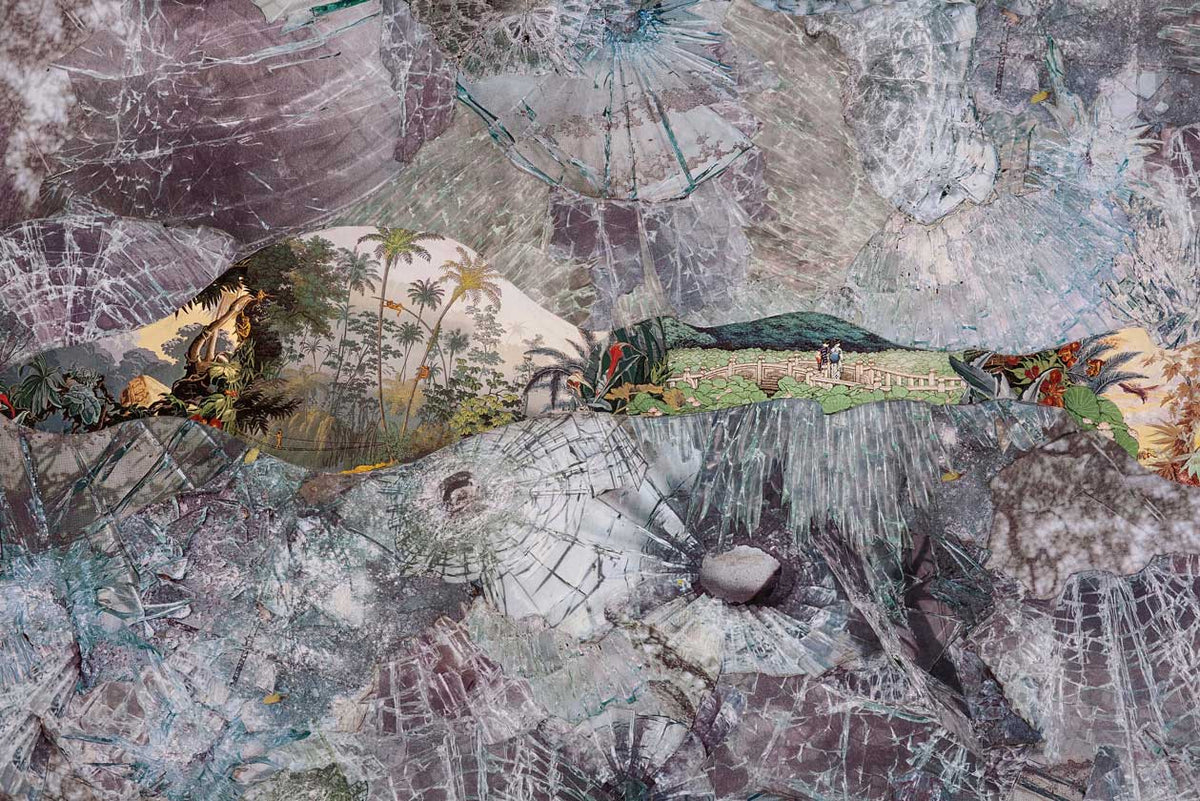
At its centre is a question about what is essential and what is incidental. From masters like Pollock, Klee, Kandinsky or Miró she took only what she considered necessary, never absorbing their language. In her canvases the backgrounds are nebulous and evaporated, tangled up with a musical influence of quavers, notes and piano keys that unify the visual and the auditory. Abstract figures appear, moons, suns, boats, striped geometry, pennants, the number five that came to her in dreams, clowns, fish that evoke water and origin. Collages of cut paper give the work a festive, playful, circus-like air that invites free exploration. Labyrinthine paths in which there is no right or left, where nothing begins or ends but where the options are infinite. Everything connects and flows at once.
Even colour has a strategic intention. Intense reds, blues and yellows give a colourful surface, alternating with grey, white and black grounds that could be dreams or nightmares, light or shadow. Geometry takes its place too, alongside asymmetry and the double frames she used to bound the space of the canvas, underlining what is left inside and outside.
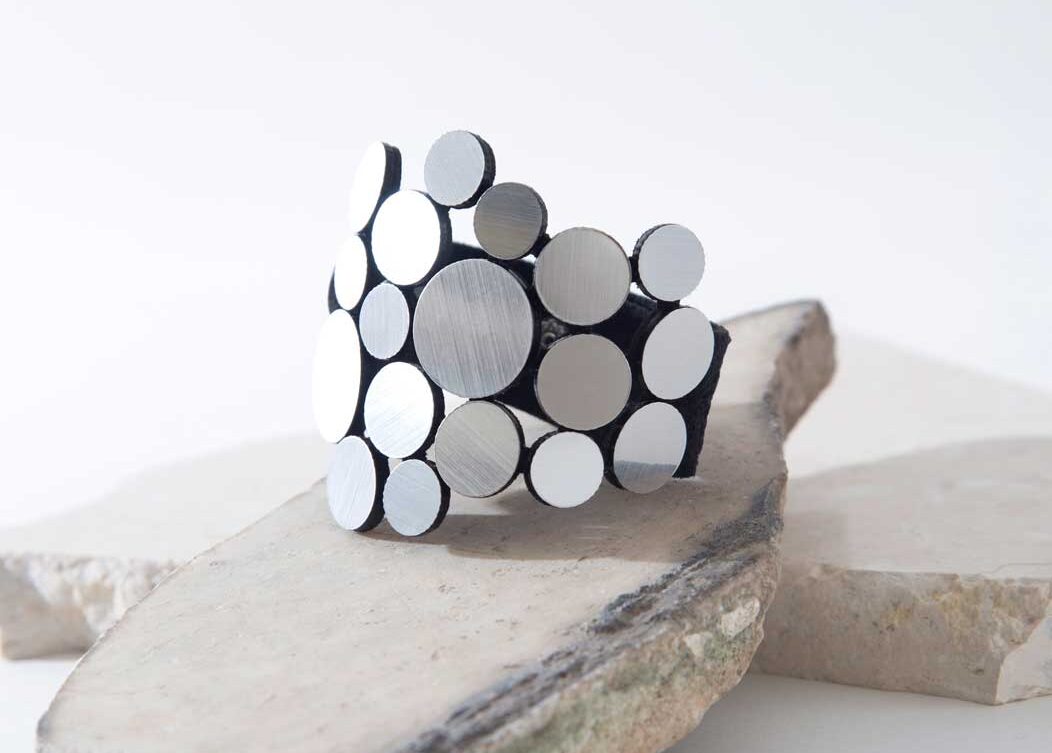
Ides Kihlen did not use the materials of high painting. With little coloured papers forming a collage, she broke the canon of elite painting. And like Ides, Iskin Sisters also addresses women — through geometry and through the colours of necklaces, bracelets and earrings. Like her, it reinvents the idea of jewellery, transferring the nobility and importance usually placed in precious materials to the design instead. Because “art is a different way of living, one you have to get used to. It is a way of living that expands into everything, even into the way you eat”, as Ides put it — to which Iskin would add: “and into the way you wear what you put on.”
Editor’s note. This piece was first published in October 2019, when Ides Kihlen was 102 and still painting every day. She died in April 2026, at the age of 108, the longest-lived painter in Argentine history. We have kept the original text as it was written.
Images of Ides Kihlen and her work are not reproduced here, as the rights belong to their photographers. Her work can be seen at the Museo Nacional de Bellas Artes homage and in her biography.

Leave a comment
This site is protected by hCaptcha and the hCaptcha Privacy Policy and Terms of Service apply.