
Nora Aslán: “I don’t invent anything, I photograph what’s already there”
“I don’t invent anything, I photograph what’s already there”
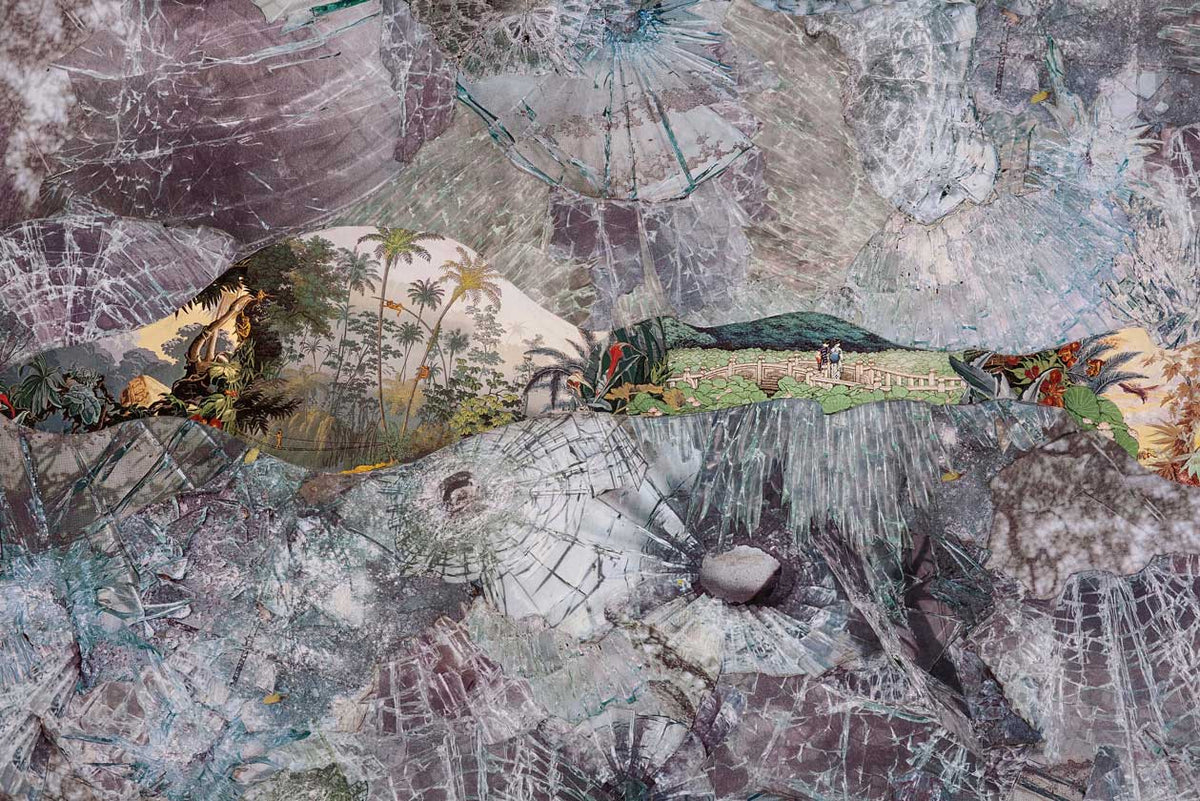
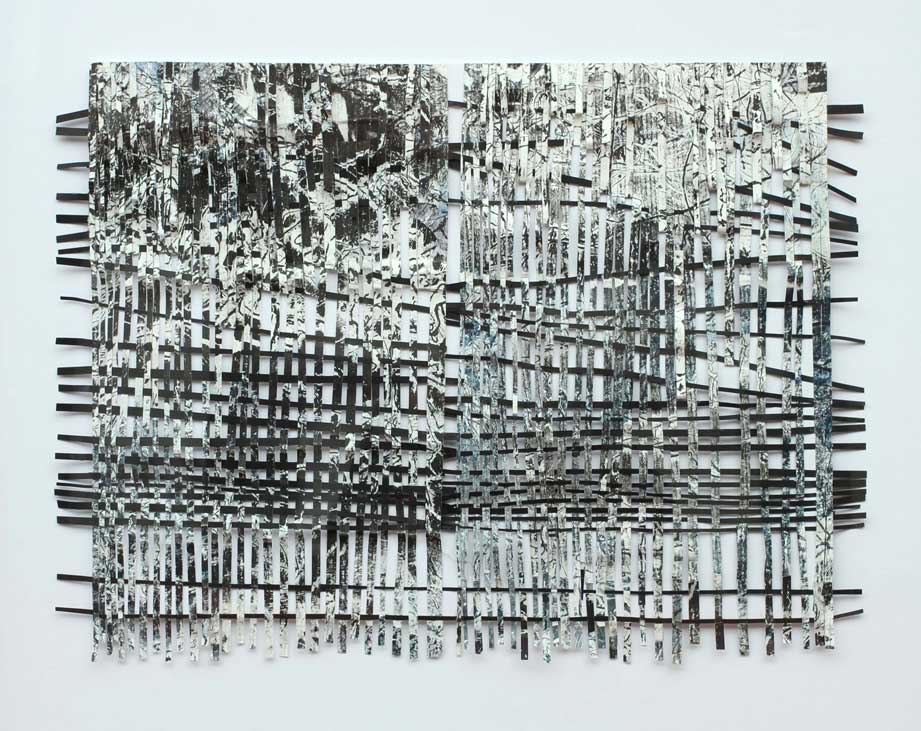
Nora Aslán’s world is unsettling because it opens questions that ask to be sat with. Her studio is a large hall with high ceilings and wide windows that let the light in at an angle. From a distance, her work reads as geometric harmony — chaos held in order, nothing out of place. But step closer, and the contained violence begins to take shape; a certain horror seeps in and settles on whoever is looking. And even after you step back, what you have seen cannot be unseen.
Who is Nora Aslán
As a child, being an only child, she built tunnels in the garden out of chairs and fabric. She cooked for her dolls, and when her best friend’s older sisters left the house, the two of them would try on their clothes and high heels in front of a large mirror.
That playful freshness of childhood is still alive in her work, full of shapes and colour. Her language shows things through a syntax that is ironic and, at times, raw. In others she values humility, generosity and the capacity for joy. She cannot stand lies, cruelty or arrogance. In her free time she would rather read essays than listen to music.
She is the author of perspectives, because the gaze never escapes her work. Her studio is her second home and also a refuge, a place to connect with herself and with the world. There she is accompanied by the witnesses, as she calls her alter egos — sometimes they look, sometimes they don’t, but they always pass silent judgement on what is happening.
She began in textiles and from there moved through other formats: sculpture, installation, painting. She is, without a doubt, the sum of many things — but above all a sharp, energetic woman who confesses to being in love with life.

The interview
Tell me about your studio.
It’s my second home. It used to be near my house, but my husband and I moved downtown and now it’s forty-five minutes away. I turned the outdoor space into a small garden and put up a pergola for the summer days. We call it la estancia — the ranch — because he once gave me a life-size cow from a promotion. Upstairs is the storage for unsold work and whatever is left over from the exhibitions.
There’s a glass-fronted cabinet against one of the walls, full of objects. What’s inside?
That’s my cabinet of wonders. It holds remnants of other works, things I’ve found in the street, things people give me. Sometimes I use them in a piece and sometimes I don’t.
Which traits define you?
Vitality, a sense of humour, and persistence.
How did you start out?
I worked in textiles for several years and did well. Around that time the serious political events began — the persecutions, all of it. Textiles stopped giving me the intensity I wanted to show. At first I pushed the material: synthetic felt, burning it, painting it with an airbrush. Then I used branches to weave baskets from natural materials, until one day I said, “right, enough, I’ll do something else.”
What subjects were you working with?
Famines, displacement, peoples forced to migrate. I found the images in magazines like LIFE. I started buying them and collecting photographs, cutting them out, making folders. That was when I discovered that a colour photocopier could print in mirror image, and the series “Carpets” came out of that idea.
Tell me more about that series.
I bought books on Persian carpets to study them. The structure was a border and a central field. From a distance my work looked like those carpets, but as you came closer, everything that seemed to be an arabesque turned out to be cut-outs of people to whom something was happening — a crowd suffering together. All those people became a texture you could walk on. And afterwards, looking again from a distance, you could no longer get back to the pretty geometric image from before. That’s where the witnesses appeared.
Witnesses?
They are the ones who look and have no speech, but who pass silent judgement on what happens. The witnesses are really my alter egos, in the form of statues, animals, praying mantises, among others. The idea is to make visible — to show through another language.
Where do they come from?
In a literature course I took, the professor was talking about Primo Levi during his imprisonment in the Holocaust. He said there were some Jews who walked hunched over, looking at the ground, never lifting their heads so as not to see anything, letting themselves die. Others were convinced they had to fight to come out alive and bear witness, because the world did not know what was happening there. Those were the ones they called witnesses: the ones who said nothing, but who looked. That was exactly what I had been trying to say, only in another form. It struck me so deeply that I have used it in almost all my work ever since.


Which traits in others can you not stand?
Cruelty, lies and arrogance.
And which do you value?
The capacity for joy, generosity and enthusiasm.
Where do you look for inspiration?
I don’t invent anything, I photograph what’s already there. I assemble a kind of syntax that is never the same twice.
Which woman, living or dead, do you admire?
I have never managed to replace my admiration for the screenwriter Agnès Varda.
What do you fear?
Illness, malice and violence.
In the creative process, which comes first: form or content?
Each stage was determined by a format, but the idea was always the trigger. Then comes the search for the form that can best carry that idea. Sometimes external circumstances determine the format too, and that turns out to be an interesting place to work from.
What small pleasures do you enjoy?
Spending my time creating is a privilege — both doing it alone and being with the people I love. Travel, near or far, is on that list too.
How did you experience the pandemic?
At first I couldn’t get to the studio because it was too far, so I started the “No” series on Instagram. It was a collection of hard things containing the word “no”, all of them to do with confinement, anguish, uncertainty — but never direct or preachy, always oblique. I also have a daughter with a mild cognitive disability who is an artist, and I’ve been coaching her, building her website.
How would you describe where you are in life right now?
It is a grave moment for humanity.
Where would you like to live?
Somewhere where wishes and plans are not like seeds falling on dry ground with no way to water them.
What is still on your list to do?
Everything I feel I have left to do is what drives me. I’m always joking about reincarnation plans, picking out which facets to take on next — and I keep changing them, without setting limits, because something new always turns up.
What are you working on now?
The most recent piece shows a place of uncertainty full of flying plastics discarded on the ground, and taxidermied birds heading elsewhere, migrating.

Nora on film
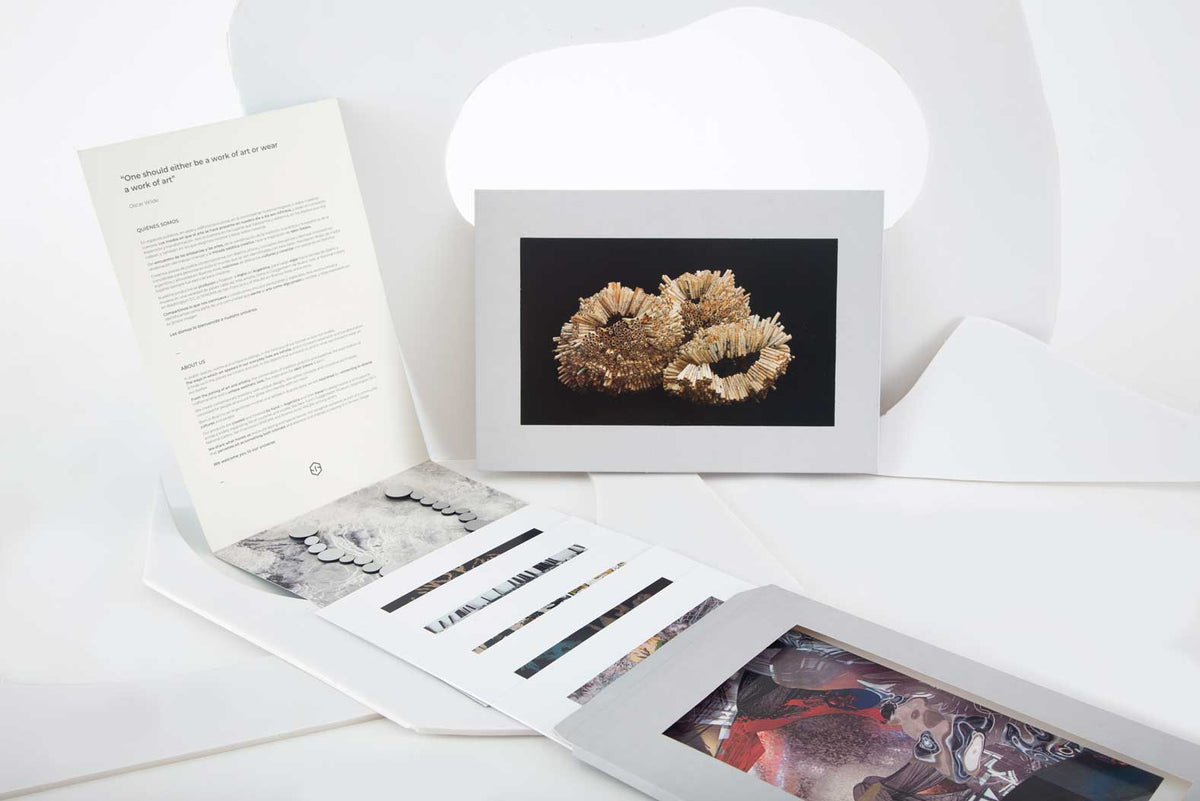
Nora Aslán is part of United by Art, the programme through which Iskin Sisters invites contemporary women artists to create the art prints that accompany every piece in its packaging.
To see more of her work: noraaslan.com · @noralaslan

Laisser un commentaire
Ce site est protégé par hCaptcha, et la Politique de confidentialité et les Conditions de service de hCaptcha s’appliquent.