
Ana Chaveros: “You have to understand that the work is one second in the artist’s narrative”
“You have to understand that the work is one second in the artist’s narrative”
Ana Chaveros
Who is Ana Chaveros
As a child she loved inventing worlds. Studying architecture gave her the chance to develop a command of space. She is interested in Pollock’s dripping and the emotion of colour in Rothko.
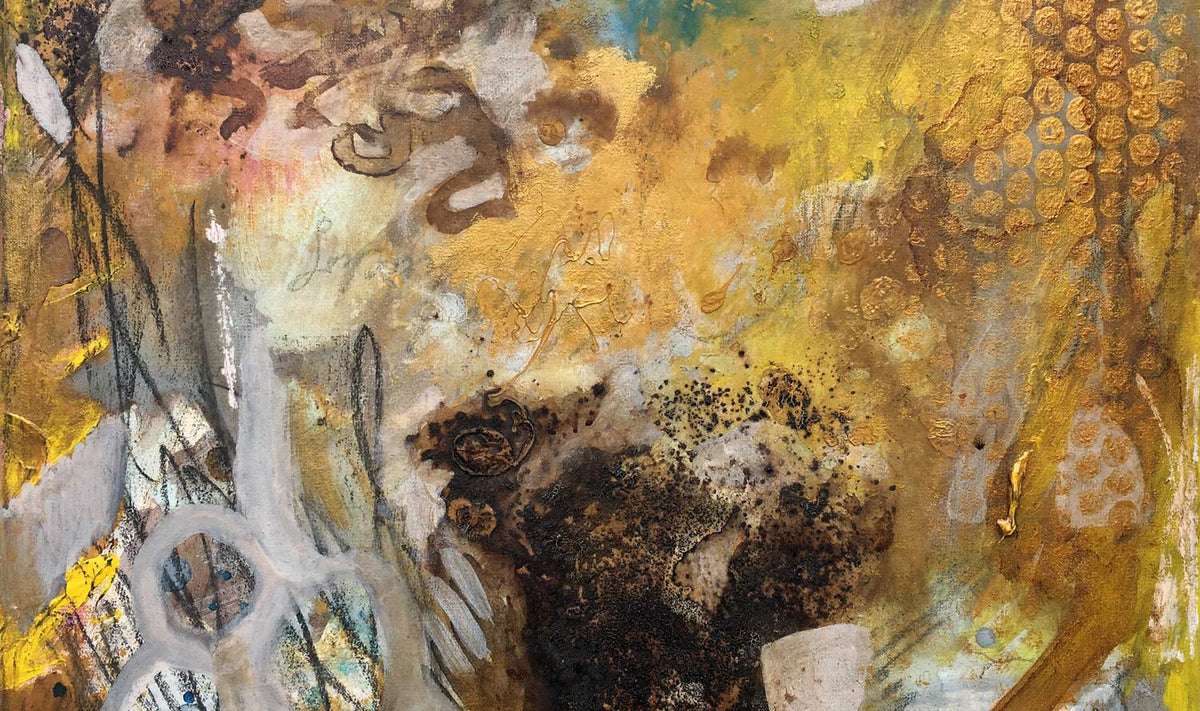
She values personal space, and all her relationships are built on that shared respect. Painting has allowed her to express herself with complete freedom. Her work is a gestural expression — action painting — although every void in it is deliberate.
The things she takes pleasure in: a lit candle, a beautiful table, coming home and finding it tidy. She comes from a family of strong women who inspire and guide her, day after day.

The interview
What did you like doing as a girl?
I always had a rich inner life. There’s a family anecdote: before the Harry Potter books came out in Argentina, my grandmother brought them from the United States. I devoured them; I couldn’t leave that world. I enjoyed myself more imagining inside those spaces. Later, as an adult, you build your character — and you also have to socialise.
What did you imagine you’d be when you grew up?
I never saw myself as a visual artist; I didn’t see it as a profession. When I had to choose, I did architecture, which let me develop my handling of space.
Why do you paint?
I went through a big personal crisis. My identity was erased completely — nothing around me had anything to do with what I actually liked. I started trying things: dance, ceramics, painting. It came gradually. I didn’t see it as a professional project, but I always had my family’s support — although in art there is nobody to tell you you’re doing it right. You never know when the moment is. The career arrived on its own, and the work is something very intimate. I feel the work has a connection with me.
Which artists inspire you?
I’m fairly eclectic about the artists I like. In New York there are many expressionists I admire. Pollock’s process and his handling of dripping interest me a great deal, because you have to hold your nerve to do it. I also value Rothko’s work — I think about how much a canvas of colour can move you. Matisse is a great colourist. Francis Bacon’s work has enormous force and is raw. The image is very subtle, but he paints pain, contracted muscles… I find it sublime that he could make a beautiful work that borders on the macabre.


Which traits define you?
To function, I need space. I’d rather have that than have you try to help me, because I feel very invaded. All my relationships are built on that. Motherhood has tested me, though — I’m giving up space all the time. But my output now is better than before. If I have five minutes, I use them. Energy gets managed differently.
And in others — which traits do you like and dislike?
I value people who respect other people’s space. I don’t like the intrusive ones, or the ones who hold an absolute truth.
Tell me about your work.
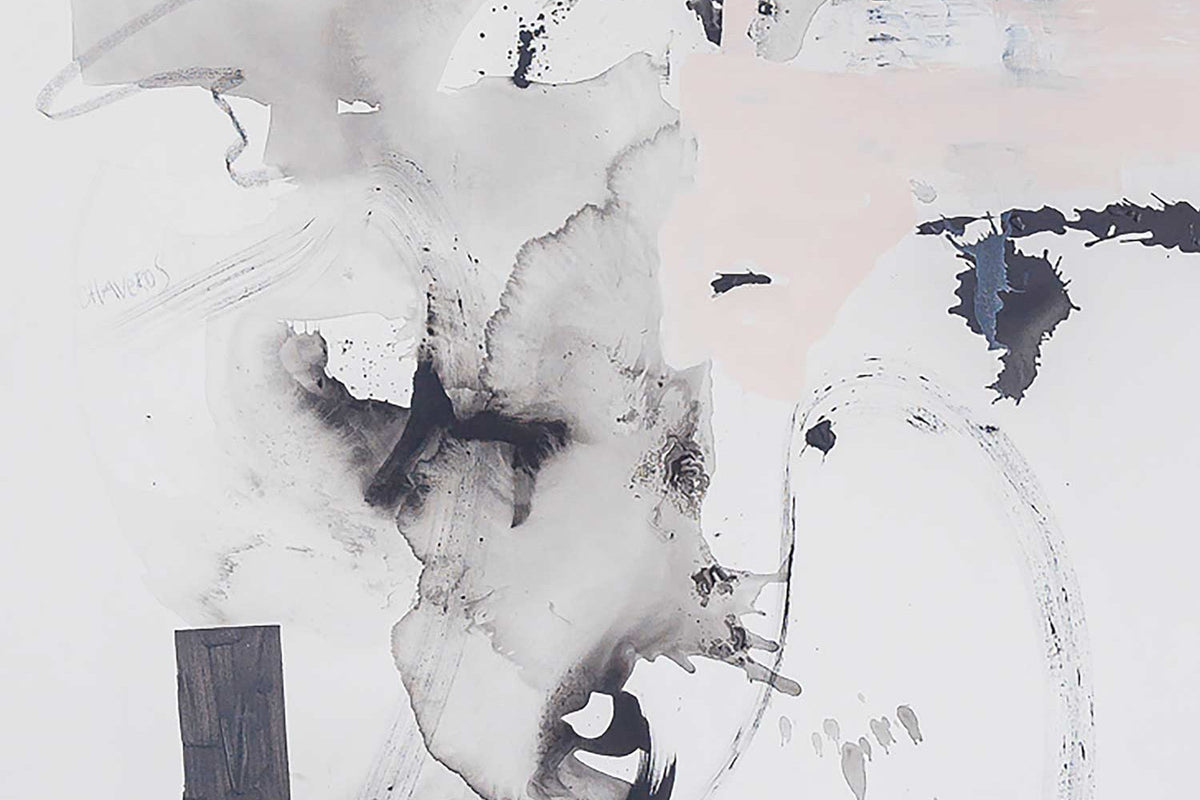
It’s an invitation into a micro-world where the first image may suggest gestural expression, action painting — but every movement and every void is deliberate. What my work does is invite you to look a little beyond that image, and if it makes noise then it is surely calling you to listen.
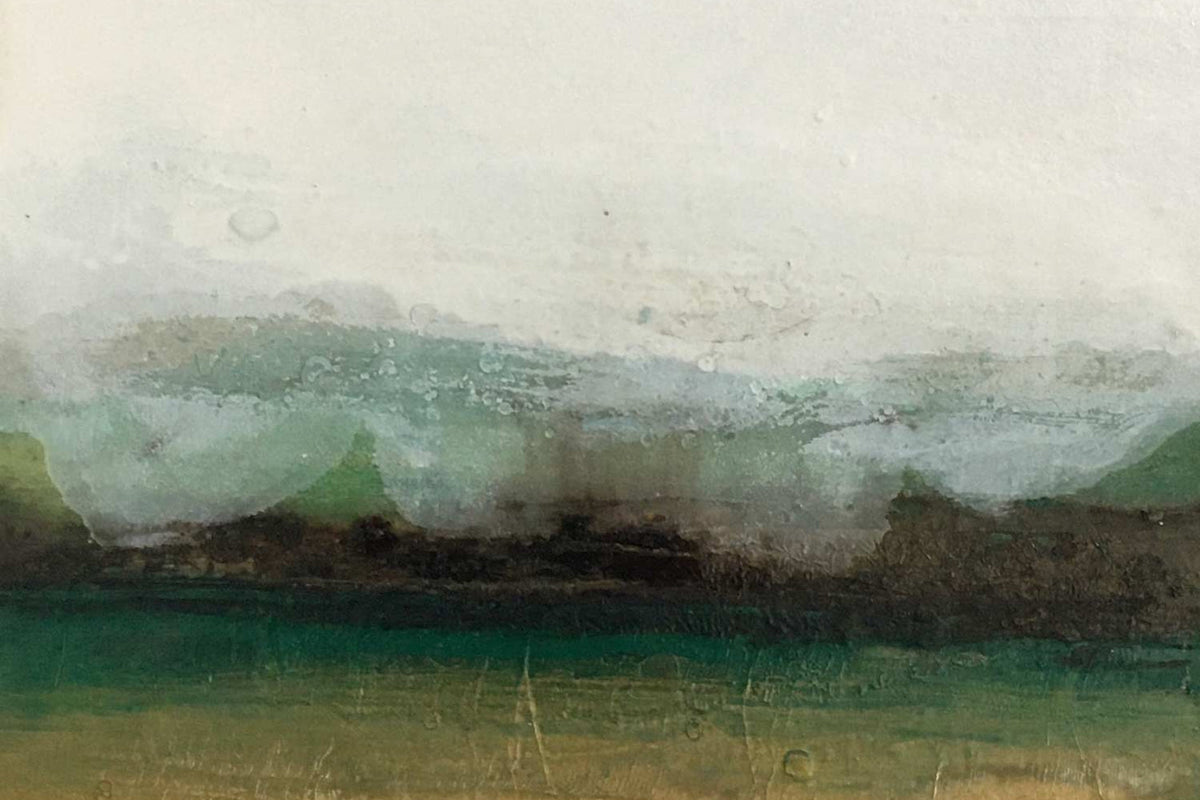
You have to understand that the work is one second in the artist’s narrative. Art has that quality of never finishing being discovered, of saying nothing. The artist is doing it for themselves, not for whoever comes to look. So it’s about standing in front of it and letting yourself feel. Giving a chance to whatever unsettles you. At this moment in history we are in abstraction and simplicity. What is valued, and what enriches the artist, is the process behind reaching a particular degree of abstraction.
Small pleasures?
I make such a cult of personal space that setting a beautiful table, a lit candle, or everything being tidy when I get home — that’s already a pleasure that does me good.
What do you imagine will remain of you?
When I had my daughter I wondered whether I should interrupt painting for a while, and what stopped me was that the image I want her to have of me is of someone who did what she loved. You have to dare. Sometimes we build walls — and even though at home nobody ever told me no, we censor our own dreams without meaning to. So more than leaving something behind, or the work transcending, it’s that my daughter knows she can do whatever she wants, and put everything she has into it.
What is your creative process like?
I start from the stain, from chaos, and from there I work out how to order it. It’s quite slow, because my canvases have more empty space than paint. I work on several pieces at once. I think putting all your chips on one thing is too much pressure and makes you lose freshness. My work used to be more subtle, but as I allow myself to make noise — while looking after the composition, obviously — I need stronger forms, more weight. Though I don’t know what I’ll need in another five years. I keep changing materials, trying new things…
Where would you like to live?
I was fairly nomadic all my life, but here I feel safe. It’s the first time I haven’t fantasised about leaving somewhere. I might go to prepare an exhibition, but a few months, no more.
Which social issues concern you?
If I have to name something specific: when I was diagnosed with thrombophilia, the health plans didn’t cover the treatment. I could pay for it — but how many women can’t? Motherhood is at stake, and these are subjects that need to be put on the table and debated. And yet, because they’re small or affect fewer people, sometimes nobody talks about them.
How do you know a work is finished?
For me it’s always unfinished. But it helps to know that the extra idea I had can be used later on another canvas. We’re constantly in the momentum of seeing one more possibility. So I test myself and cut it off.
Which women inspire you?
I come from a family of strong women. I think they have always been an inspiration and a guide. My sister too. As a child I was very fearful — if there was a puddle I’d go round the side rather than cross it. She’s five years younger, and she’d walk straight through and show me nothing happened. She has ended up being my reference.
If you hadn’t devoted yourself to this, what would you have done?
I studied architecture. I still have a weakness for spaces; I work with it and apply it to everything. But painting has given me that intimate moment of doing what I want. Afterwards people can come and see the work, or buy it. But the process of making it has been completely free. I suppose if I hadn’t done this, I would have made my peace with architecture.
If you could watch the film of your life, what would you like to find?
Today I can’t imagine my life without a brush. It gives me a little vertigo to think that if I hadn’t gone through difficult moments in the past, I might never have found it. In fact, when someone commissions a work from me, I think about what that person would have put in their house if I hadn’t lived through everything that happened to me.
What are you working on now?
Painting, but I’ve added drawing. I’m continuing my abstract process in large format. But small paper leads me to solve other things. I’m seeing what comes out of that — the shift between the expressive stain and the meticulousness of the nib. I never have an exact idea of what I’m going to do. I feel hands have memory, and what I make, the hand repeats at another scale.


Ana on film
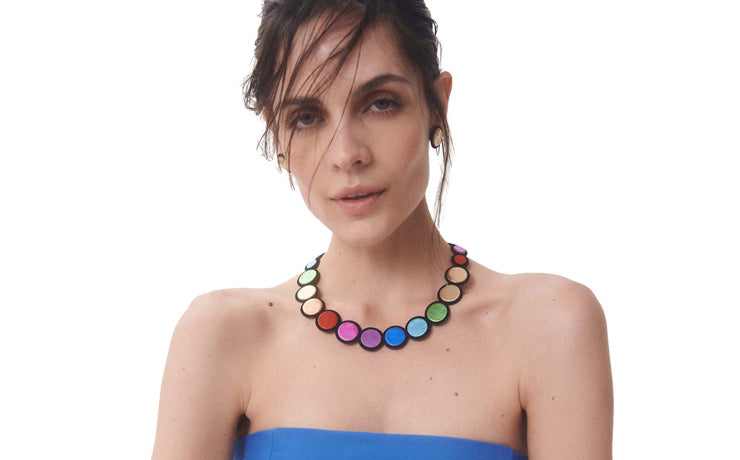
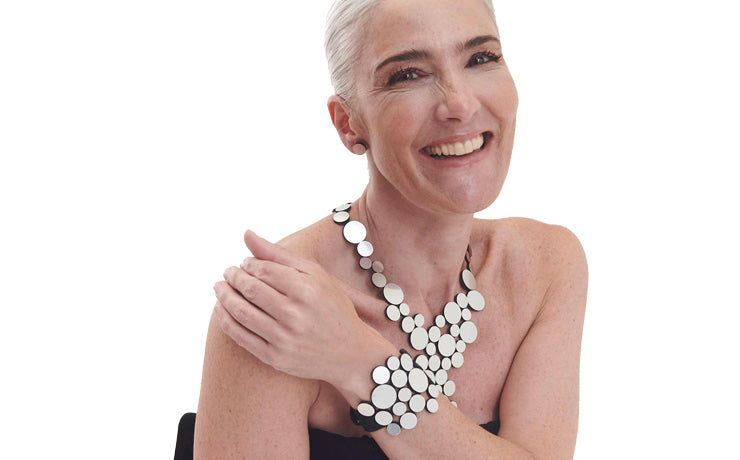
Ana Chaveros is part of United by Art, the programme through which Iskin Sisters invites contemporary women artists to create the art prints that accompany every piece in its packaging.
To see more of her work: @ana_chaveros

Leave a comment
This site is protected by hCaptcha and the hCaptcha Privacy Policy and Terms of Service apply.