
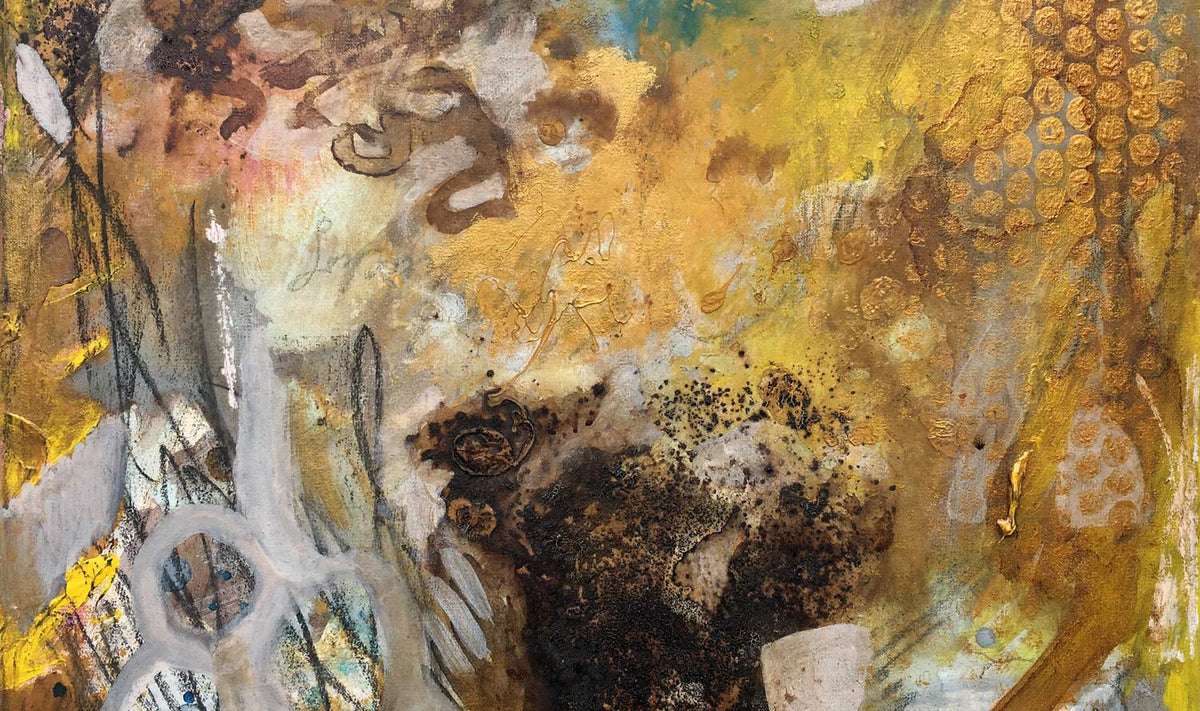
Julia Godoy Steindl: “A woman’s place and her voice move me, because as a mother it has been hard to make room for myself”
“A woman’s place and her voice are things that move me, because as a mother and a woman it has been hard to make room for myself”
Julia Godoy Steindl
Who is Julia Godoy Steindl
Since she was a girl, drawing and expanding her imagination were a pleasure. At home the television was reserved for the adults, so Julia took refuge in reading. Marie Curie’s story struck her — how she gave her life to science.
Painting arrived to strengthen her work as a graphic designer; little by little she realised how therapeutic it was. She considers herself hard-working, intuitive and structured. She would love — if it were possible — to travel to the Colombia of García Márquez, and to live in New York or Madrid.
A woman’s place and her voice matter to her, especially since becoming a mother. She values cheerful, light people, and cannot stand hypocrisy. When she paints she builds a colour palette and then lets herself go. She respects process, so the work can decant like the wines of her native Mendoza.

The interview
What did you like doing as a girl?
Drawing has always been a pleasure. My mother is an architect, so I was very close to drawing and to art. Being able to expand my imagination that way and then move it onto paper was the greatest thing.
As a child, what did you think you’d be when you grew up?
I always wanted to draw. But the mandate that “being an artist doesn’t pay” was there too. I think my career came out of that. Graphic design has something artistic in it, and a lot of creativity that I enjoy enormously. And then when I paint I allow myself the space to create on a canvas, and there I forget about everything else.
Which women do you admire, which ones inspire you?
This project, for instance, made me proud. To think that the people behind it are women running a successful international company, and that they also lift up other women to make their work known… Women in art have always been undervalued, so this interests me. And as a child I read a great deal. At home the television was reserved for the adults, so I took refuge in reading. One of the women who struck me most was Marie Curie. The story of how she gave her life to science was a childhood reference.
Which books, films and music speak to you?
Anything to do with imagination and creativity grips me. I keep postponing a trip to Colombia because I know that when I go it won’t be the Colombia of García Márquez’s books, and part of me doesn’t want the disappointment. I also like Isabel Allende, and her book Paula, where she tells how she said goodbye to her daughter.
I read Harry Potter fifty times. The author has spectacular imagination — and more so knowing her story, writing in a café while rocking her baby. It reflects women, it encourages us to follow our dreams and fulfil ourselves despite the constraints, or the disadvantage we’re at compared to men.

Which traits define you most?
I consider myself hard-working. I love what I do. I’m structured, above all coming from design. I follow the laws and rules you have to observe — but then in painting I set myself free, I can create for the sake of creating; there’s no client to satisfy, no objective to meet. I do it for me. I appeal a lot to the intuitive. What I put on the canvas is what stays. That’s how I get out of my comfort zone, which is something I find very hard.
Why do you paint?
At first I did it as a secondary activity that could strengthen my profession — it gave me graphic tools to solve certain jobs I would otherwise have had to outsource. It was a process, one more tool. But little by little I realised it’s a therapy, that I can spend hours at it and step outside my structure. Here there’s no Control+Z to go back if I didn’t like something. What is there is what stays, and I have to deal with it.
If your life were a film, what would you like to see?
You always want to leave a mark, to contribute something. But I think what I’d like to see is that I was happy, that I enjoyed it. Sometimes that’s hard because I put in so many hours. I think I’m a long way from seeing my work in a museum. There are many talented artists — but if someone has a painting of mine in their house and feels at ease in their home when they look at it, for me that’s more than enough.
You say you work long hours. How do you balance personal and professional life?
When you’re a woman, a mother and you work, they hand you your baby and the guilt — it all comes in the same package. But the truth is I have a great partner. While I’m talking to you I can see him playing with the children in the garden.
Women have always had to carry the load of the children, but the paradigm is changing, because it’s their responsibility too. There are many men who support and share so that a woman can develop. You have to build it daily. I have a five-year-old daughter, and for her it matters enormously to see that she has a mother who went after her dreams, who devoted herself to doing what she loves. That’s the best thing I can leave them.
Where would you like to live?
New York or Madrid are among my favourite cities.
Which social issues matter to you?
A woman’s place is something that interests me, without being militant about it. Here in Argentina there is a fairly aggressive feminist current that I don’t identify with — although I do identify with the fight itself: a woman’s situation and her voice. Those things move me, because as a mother and a woman it has been hard to make room for myself.
Which traits in others do you like, and which do you detest?
I value cheerful, light people who are straight with you. I can’t stand hypocrisy.
Small pleasures?
Travelling around here — Dique Potrerillos, San Juan, San Rafael. Or Brazil, New York, Madrid. Discovering something new, eating something good, that’s what I enjoy most. A cold beer. Good coffee. A few warm rays of sun in winter…
What frightens you?
It scares me to lose creativity, to lose the enjoyment. I wouldn’t want day-to-day life to absorb me so much that I couldn’t keep creating the way I do. Today I have the chance to create every day, and that’s something I don’t want to lose.
If you hadn’t devoted yourself to art, what would you have done?
I’d have considered being an architect. Medicine also attracts me — although if I see a drop of blood I keel over, so I don’t know how compatible that is.
Tell me about your work.
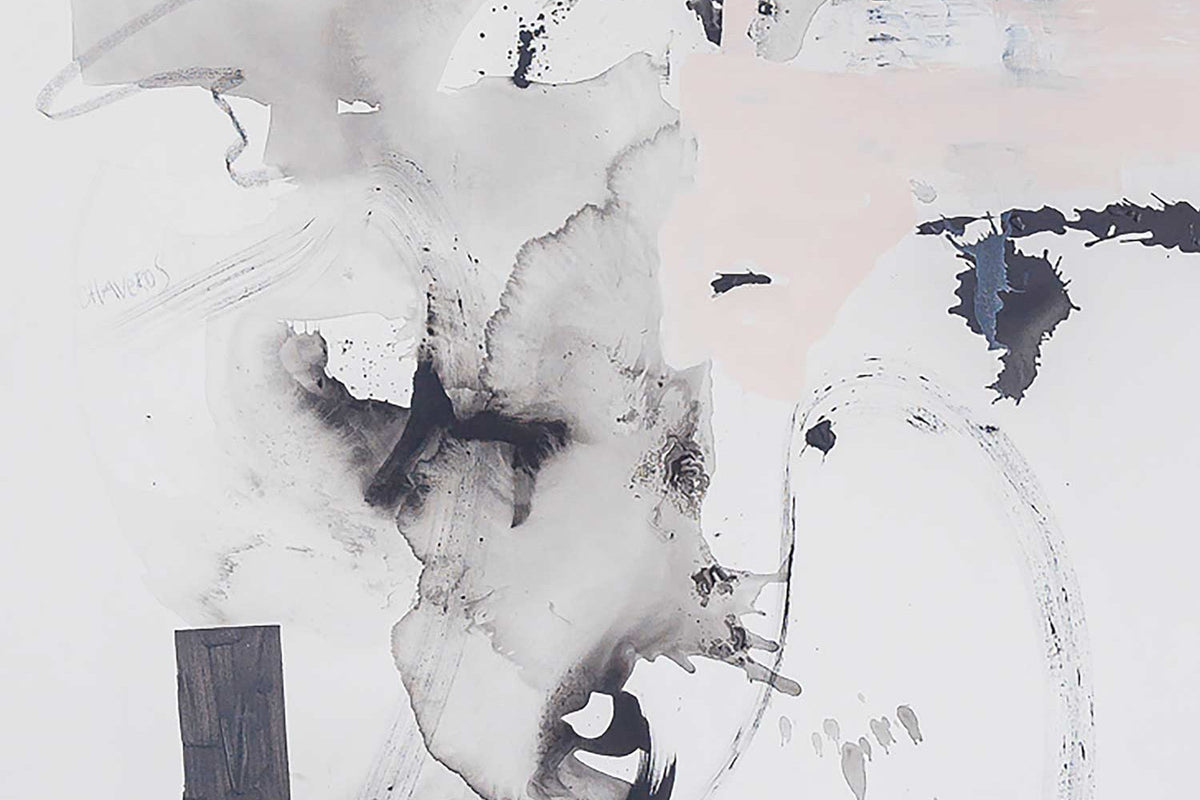
I paint abstract, in acrylic. To create the stain I play with consistencies, adding more or less water so it comes out diluted or solid. To work in layers I need it to dry relatively fast. My studio is at the back of this house — upstairs. That’s where I paint, mix the colours and use different techniques.
What is your creative process like?
I let it flow. I build a colour palette, or if it’s a commission I look for the colours — but generally the palette I thought of at the start leads me somewhere else. It isn’t linear; I go forwards and backwards constantly: I stop, I look at whether I like the composition, whether something’s missing or should come out. If it’s still wet I take the hose to it to erase it, and that produces another stain I hadn’t planned.
I make several paintings at once, in different sizes. I pause one, leave it, and pick something else up. Those waiting times help me with the anxiety of wanting everything to be immediate. It’s important to respect the process, to let it decant.
I work a lot with La Tiendita de Arte, which shows work from Mendoza, and I have to remember that once I’ve given her a piece and she has shown it, I can’t retouch it any more. Although it has happened that they publish paintings I then reworked and added to, and they’re no longer as she showed them.
Which painters speak to you?
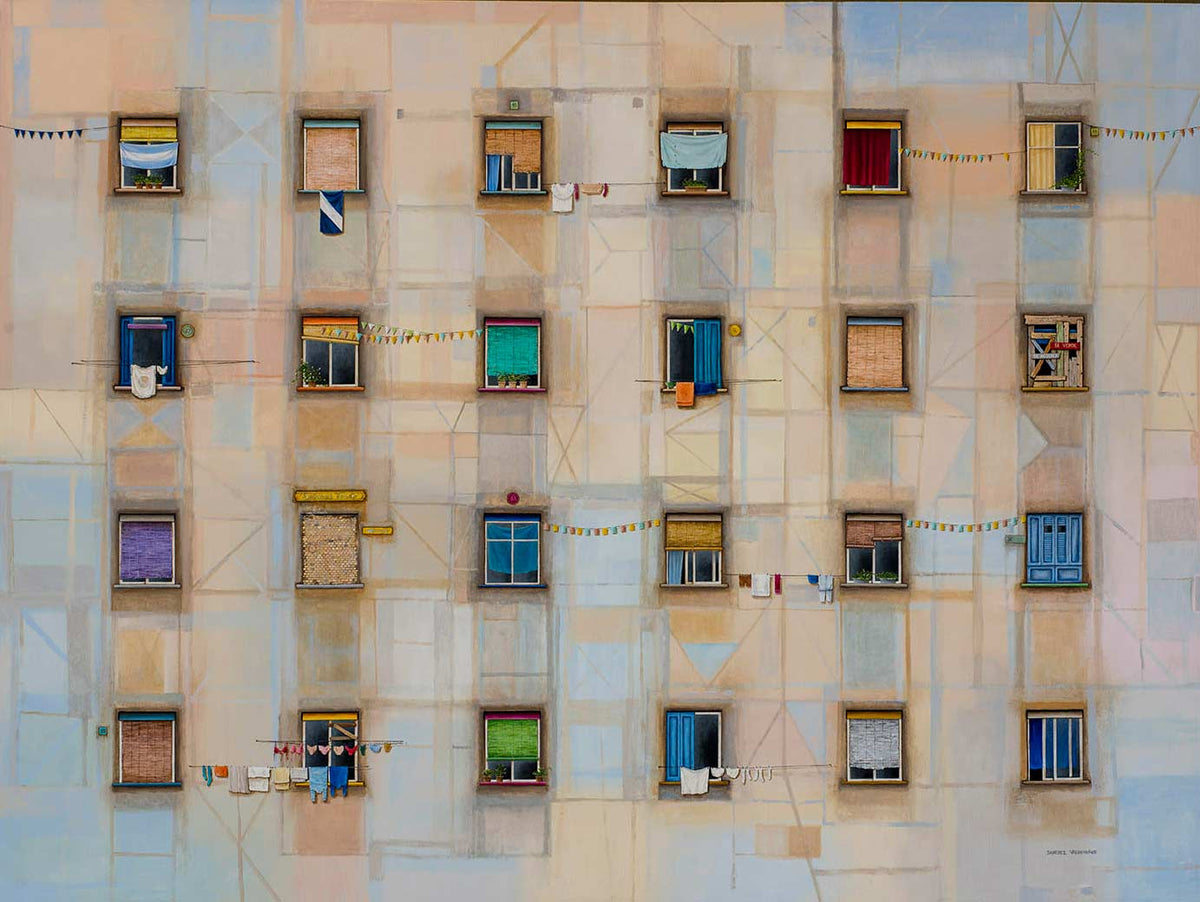
There’s a Canadian artist I love: Andrea Soos. Her colour palette is extraordinary. From here in Mendoza, Martín Villalonga was my teacher for a while and I admire him greatly — his handling of colour, of the stain…
Is your work thought, or felt?
In my job I design wine labels, and that involves concepts, ideas. I carried all of that into my paintings, but I ended up boxing in the viewer. At a certain point I considered dropping titles altogether, so as not to condition them. I like it better when people find it by their own means. So I prefer to think that my paintings transmit an emotion.


Julia on film
Julia Godoy Steindl is part of United by Art, the programme through which Iskin Sisters invites contemporary women artists to create the art prints that accompany every piece in its packaging.
To see more of her work: godoysteindl.com · @godoysteindl

Laisser un commentaire
Ce site est protégé par hCaptcha, et la Politique de confidentialité et les Conditions de service de hCaptcha s’appliquent.